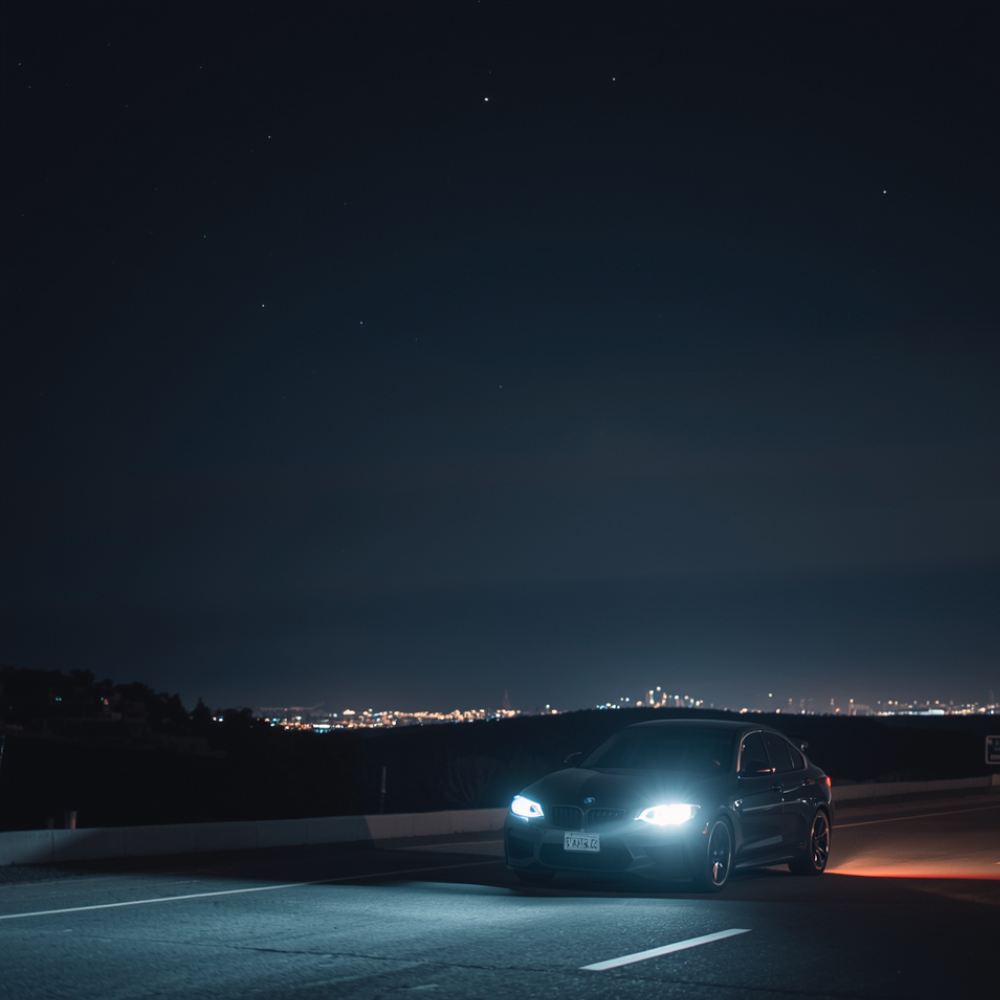
Night driving can feel like a whole new skill set—darker roads, brighter headlights, and fewer visual cues. The good news is that a few simple habits can make night driving feel calmer and more predictable. This post is for early driving knowledge and permit test prep (not behind-the-wheel instruction), so you’ll understand what to look for and why it matters.
These basics are helpful for permit test prep and understanding common night driving rules without memorizing them blindly.
1) Use your headlights early—and use the right setting
Headlights aren’t just for helping you see—they help other drivers see you. A good rule of thumb: if the sky is dim, it’s raining, or you’re having trouble seeing details clearly, turn your headlights on.
- Low beams are the default for most night driving.
- High beams can help on dark roads with no oncoming traffic, but they should be dimmed for oncoming cars and when you’re following someone closely.
On many permit tests, you’ll see questions about when to use headlights and when to avoid high beams. The “why” is simple: high beams can reduce safety if they glare into someone else’s eyes.
2) Look farther ahead than you think you need to
At night, your “seeing distance” shrinks. That means you have less time to notice a curve, a stopped car, a pedestrian, or an animal near the roadway.
Try to build the habit of scanning farther down the road instead of focusing only on what’s directly in front of your car. When you look ahead, you naturally give yourself more time to make smooth, calm decisions.
3) Don’t stare at oncoming headlights—use your lane position as a guide
Bright headlights can feel distracting, especially when you’re new. If you stare at them, your eyes may take longer to readjust to the darker road.
Instead, keep your attention on:
- The right edge line (or the road’s edge) as a reference
- The center line and your lane position
- The general shape of the road ahead
This is a common permit-test concept: avoid glare by shifting your focus to a safer visual reference, not by “fighting” the brightness.
4) Give yourself a little more following distance
Even if your speed stays the same, night conditions can make it harder to judge distance and spot hazards early. Adding extra space between you and the car ahead gives you more time to react smoothly.
Think of it as “building in calm.” More space means fewer sudden decisions—especially if the car ahead brakes unexpectedly or you encounter something you didn’t see right away.
5) Keep your windshield and mirrors clean (it matters more than you’d expect)
A slightly dirty windshield can turn headlights into a blurry glare. The same goes for side mirrors and the rearview mirror.
Quick, practical habits:
- Wipe the inside of the windshield too (it can film over)
- Clean mirrors so lights don’t streak
- Make sure your wipers aren’t smearing
This isn’t about perfection—it’s about reducing visual “noise” so your brain can focus on the road.
6) Watch for pedestrians and cyclists in places you might not expect
At night, people can be harder to see—especially if they’re wearing dark clothing. Pay extra attention near:
- Crosswalks and intersections
- Bus stops
- Parking lot entrances
- Neighborhood streets
For permit prep, it helps to remember that you’re responsible for scanning even when the road looks empty. Night driving often feels quiet, but that doesn’t mean there’s nothing happening.
Closing thought
Night driving doesn’t have to feel intimidating. When you use your lights correctly, scan farther ahead, and give yourself a little extra space, you’re creating a safer, calmer driving environment—one choice at a time. If you’re studying for a permit test, these habits also connect directly to the “why” behind many common rules.
These are the kinds of patterns you’ll see repeated in permit questions—understanding them now makes the test feel a lot more predictable.