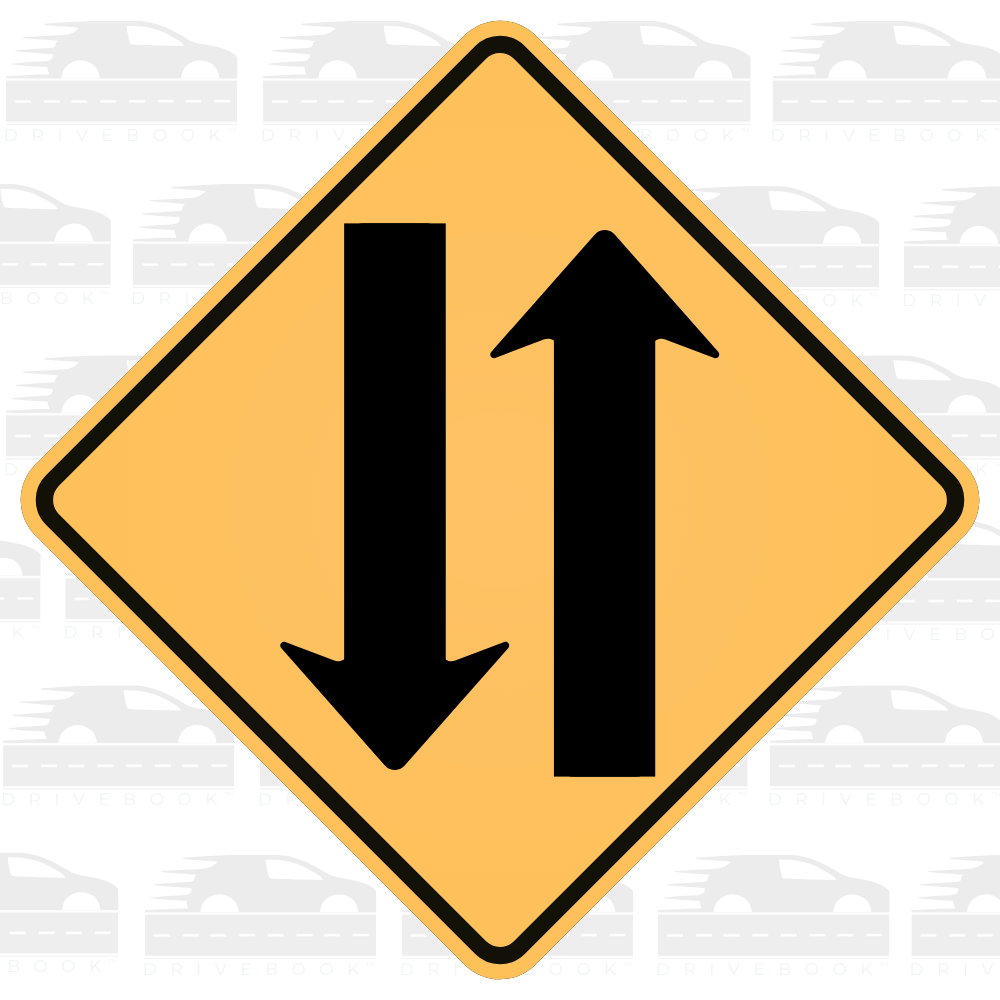
The Two-Way Traffic sign is a warning sign that tells you something important is about to change:
traffic will now be moving in both directions.
You’ll usually see this sign when a road shifts from one-way to two-way, when a divided highway ends, or when a median disappears. It’s not there to catch you off guard — it’s there to give you time to adjust.
When a road becomes two-way, the environment changes in a subtle but important way. You’re no longer just moving with traffic — you’re now sharing the road with vehicles coming toward you.
That shift requires a different kind of awareness.
Instead of only focusing forward, you need to:
- Stay clearly centered in your lane
- Be aware of oncoming traffic at all times
- Adjust your spacing, especially on narrower roads
- Stay alert on curves, hills, or areas with limited visibility
This is especially important at night or in poor weather, when it’s harder to judge distance or see lane markings clearly. A road that felt simple a moment ago can feel tighter once traffic is moving in both directions.
That doesn’t mean it’s harder — it just means your awareness needs to shift.
The Two-Way Traffic sign is there to help you make that shift early, so nothing about the change feels sudden or stressful.
Why This Sign Matters
New drivers often feel uneasy when road patterns change unexpectedly. But this sign removes that uncertainty.
It’s not about memorizing what to do — it’s about understanding what’s happening.
When you know traffic is now moving both ways, you can:
- anticipate oncoming vehicles
- stay positioned correctly
- and drive more smoothly without hesitation
💡 Drivebook Tip:
When you see a Two-Way Traffic sign, take a second to reset your awareness. Check your lane position, scan ahead, and stay centered. Small adjustments early make driving feel easier — and more controlled.
Final Thought
Driving becomes easier when changes don’t feel like surprises.
The Two-Way Traffic sign is a simple reminder:
pay attention, adjust early, and keep your awareness wide — not just forward.
That’s how confident drivers stay in control.