4-Way Ahead — get your mind out of the gutter…
it’s not what you think 😱😄
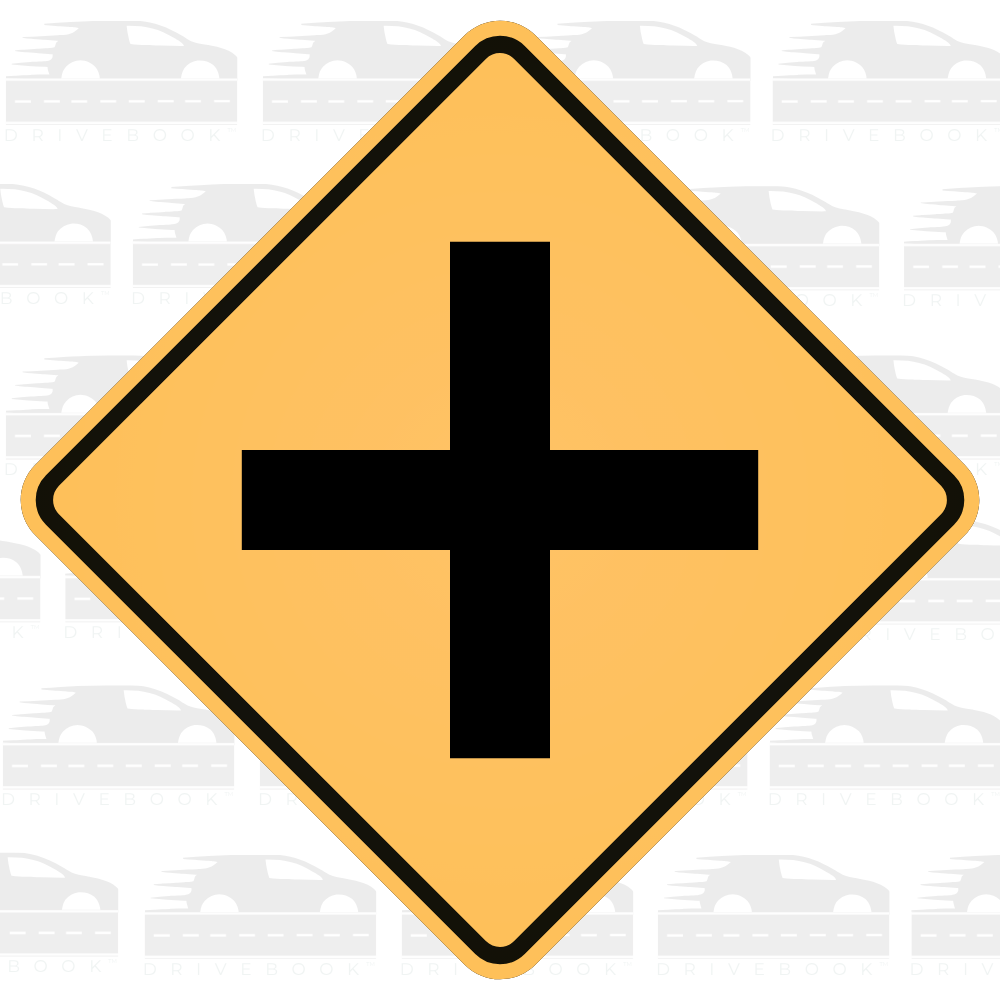
This is just your early warning that a crossing road is coming up—time to slow down, scan, and look for what’s controlling the intersection.
A 4-Way Intersection warning sign tells you a crossing road is coming up. It’s basically a heads-up: traffic may be entering from the left and right, and you’ll need to be ready to slow down, scan, and follow any right-of-way controls you see next (like a stop sign, yield sign, or traffic signal).
This sign doesn’t tell you who goes first by itself — it tells you to prepare.
For official sign standards and examples, the national reference is the MUTCD:
What the sign means (plain language)
4-Way Intersection ahead means:
- A road crosses your road.
- You may have vehicles approaching from both sides.
- You may need to stop or yield depending on the next sign or signal.
Think of it as: “Intersection coming — get your eyes and speed ready.”
Where you’ll usually see it
You’ll often see this sign on roads where the intersection might not be obvious until you’re close, such as:
- Rural roads
- Roads with trees, buildings, or hills that limit visibility
- Higher-speed roads where drivers need extra warning time
What to do when you see it (step-by-step)
1) Ease off the accelerator and cover the brake
You don’t have to brake hard — just start reducing speed early. “Cover the brake” means placing your foot over the brake so you can respond quickly if needed.
2) Scan in this order: ahead, left, right, ahead again
A calm scan helps you catch:
- A stop sign or traffic light
- Turning vehicles
- Cars approaching quickly from side streets
- Pedestrians or cyclists near the corner
3) Look for the control that actually sets right-of-way
The 4-way intersection sign is a warning. The next control is what tells you what to do:
- Stop sign: you must stop.
- Yield sign: slow and yield if needed.
- Traffic signal: follow the light.
- No sign: follow your state’s right-of-way rules for uncontrolled intersections.
If you’re teaching a teen, this is a great moment to practice the habit: “What’s controlling this intersection?”
4) Make your intention obvious
- Signal early if you’re turning.
- Stay centered in your lane.
- Avoid last-second lane changes.
Predictable driving is what makes intersections feel calmer.
Common misconceptions teens have
Misconception 1: “This sign means I have to stop.”
Not necessarily. It means an intersection is coming — you stop only if a stop sign, red light, or other control requires it.
Misconception 2: “If I’m on the bigger road, I automatically go first.”
Sometimes you do, sometimes you don’t. Right-of-way depends on signs, signals, and your state’s rules — not just which road feels “main.”
Misconception 3: “If I don’t see a car, I can keep my speed.”
Visibility can change fast at intersections. Slowing a little and scanning gives you more time to make a calm decision.
A quick coaching tip for parents
Try a simple prompt that builds the right habit:
- “Intersection ahead — what’s the control? What’s your plan?”
It keeps the focus on thinking, not pressure.
Closing
A 4-Way Intersection sign is an early reminder to slow down and scan — not a reason to stress. With a steady approach and a clear look for the next sign or signal, intersections become much more predictable.
For more calm, visual explanations of road signs and right-of-way rules, visit mydrivebook.com.