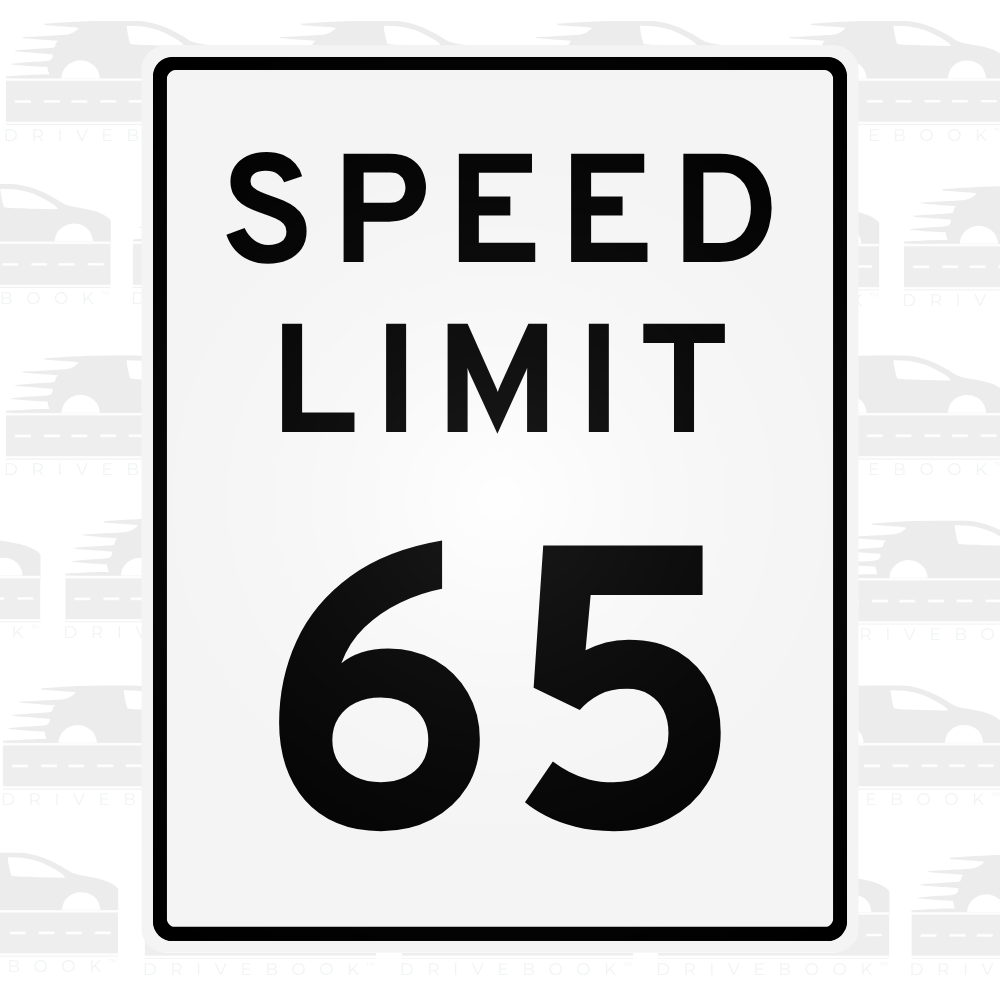
A Speed Limit sign tells you the maximum legal speed for that stretch of road, under normal conditions. It’s one of the most common signs on the permit test — and one of the easiest to misunderstand in real life.
The calm way to think about it is: the speed limit is a cap, not a goal. Your job is to choose a speed that stays legal and fits the situation (traffic, weather, visibility, road design).
If you want to see how speed limit signs are defined and used nationally, the main reference is the MUTCD (the federal manual that sets sign standards):
What a Speed Limit sign means (in plain language)
A Speed Limit sign means:
- Do not drive faster than the number shown (in miles per hour, in the U.S.).
- The limit applies from the sign forward until it changes (with a new speed limit sign) or you enter a zone where a different limit is posted.
- The limit assumes normal driving conditions.
Some roads also use related signs like Minimum Speed, Night Speed, Truck Speed, or Reduced Speed Ahead. Those are all clues that the “right” speed may vary by vehicle type, time, or upcoming road design.
When to slow down: before the sign or at the sign?
This is a super common misunderstanding.
If the speed limit is going DOWN
In most cases, the expectation is that you’re at (or under) the new speed by the time you reach the sign, because the sign marks where the new limit begins.
A calm habit:
- See the sign early
- Ease off the accelerator
- Adjust smoothly so you’re at the new speed as you pass it
If you see a Reduced Speed Ahead sign first, that’s your early warning to start slowing before the new speed limit sign.
If the speed limit is going UP
You can usually wait until you reach the sign, then gently accelerate after you pass it.
(And if traffic or conditions don’t support the higher speed, it’s okay to stay a bit under.)
Why speed limits exist
Speed limits are set to balance a few things at once:
- Road design (curves, hills, lane width, entrances/exits)
- Traffic patterns (how many cars, how many turning points)
- People walking or biking nearby
- Stopping distance (how long it takes to slow down safely)
A simple idea that helps: the faster you go, the more space you need to stop — and the less time you have to notice and respond.
What to do when you see a Speed Limit sign
1) Check your speed — gently, not suddenly
If you’re above the limit, ease off the accelerator and adjust smoothly. Sudden braking can surprise the driver behind you.
2) Match the limit and the conditions
Even if the posted limit is 65, you may need to drive slower when:
- The road is wet or icy
- Visibility is limited (rain, fog, glare, darkness)
- Traffic is heavy
- The road is unfamiliar
Most state driver handbooks include a “basic speed law” idea: you must drive at a speed that’s reasonable and prudent for conditions — even if that means below the posted limit.
3) Look ahead for “speed change” clues
Speed limits often change near:
- Town lines or neighborhoods
- School zones (with special rules and times)
- Construction zones
- Curves, hills, or ramps
If you see Reduced Speed Ahead, that’s your early reminder to start easing down before the new limit begins.
4) Keep a steady following distance
Speed choice and following distance go together. A calm baseline is the 3-second rule in good conditions (more time in rain, snow, or darkness).
NHTSA’s safe driving guidance is a helpful reference here: NHTSA — Speeding .
Quick note: consequences of breaking the speed limit (legal + natural)
Consequences vary by state and situation, but speeding can lead to:
Legal consequences
- A traffic stop and ticket/fine
- Points on your license (which can affect new drivers quickly)
- Higher insurance costs
- In some cases, license restrictions or suspension (especially for teens or repeat offenses)
Natural consequences (what tends to happen in real driving)
Even when the legal consequences are minor, speeding can create real-world consequences like:
- Less time to react to a car braking, a light changing, or a pedestrian stepping toward a crosswalk
- Longer stopping distance, especially on wet roads
- Harder steering control on curves, ramps, or rough pavement
- A higher chance that a small mistake becomes a crash
- More severe outcomes if a crash happens (because impact forces increase as speed increases)
This isn’t about being perfect — it’s about giving yourself enough time and space to make calm decisions.
Common misconceptions teens have
Misconception 1: “The speed limit is the speed you’re supposed to drive.”
Not always. It’s the maximum under normal conditions. If conditions are worse, the safe choice is often slower.
Misconception 2: “If everyone else is speeding, it’s okay.”
It can feel awkward to be the one going the limit, but you’re still responsible for your own speed. If traffic is moving faster than you’re comfortable with, a calm option is to stay in the right lane (when appropriate) and keep your space.
Misconception 3: “I can speed a little and it doesn’t matter.”
Even small increases in speed can reduce your reaction time and increase stopping distance. On the permit test, the safest answer is simple: follow the posted limit and adjust down for conditions.
A quick coaching tip for parents
Try pairing speed with one repeatable question:
- “What’s the limit here — and do conditions suggest we should be a little under it?”
It keeps the focus on judgment, not pressure.
Closing (gentle CTA)
Speed Limit signs are about more than a number — they’re a reminder to drive at a pace that fits the road and keeps your decisions calm and predictable.
If you’d like a clear, visual way to learn signs and rules (with explanations that make the “why” easier to remember), visit mydrivebook.com.