Tag: road signs explained

  • Sunday Sign Day: Traffic Circle

    Sunday Sign Day: Traffic Circle

    Share this:

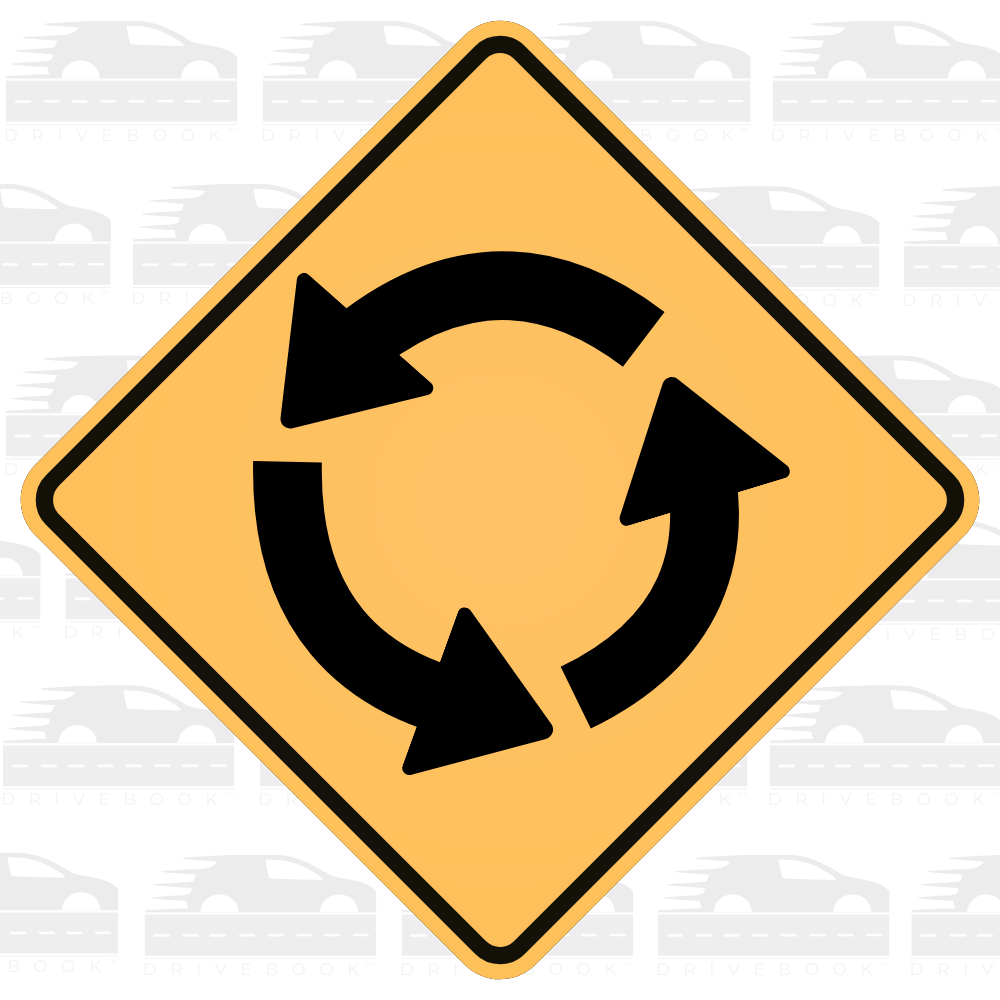
    A Traffic Circle sign is a warning sign that tells you: a circular intersection is coming up, and you’ll need to slow down, watch for other vehicles, and follow the circle’s right-of-way rules.

    Traffic circles (and modern roundabouts) are designed to keep traffic moving with fewer full stops. For new drivers, the key is staying calm and predictable: slow down early, look where you want to go, and enter only when you have a safe gap.


    What the Traffic Circle sign means

    Traffic Circle means:

    • You’re approaching a circular intersection
    • Traffic will move around a central island
    • You may need to yield before entering (often to traffic already in the circle)

    The sign is there so you’re not surprised by the shape of the intersection. Circles can feel unfamiliar at first, especially if you’ve mostly practiced at stop signs and traffic lights.


    Why this sign exists

    A traffic circle changes the “normal” intersection pattern:

    • Instead of stopping and taking turns, drivers merge into a circulating flow
    • Instead of crossing straight through, you curve around the center

    The sign gives you time to adjust your speed and scanning — which is where most new-driver mistakes happen.


    What to do when you see it (step-by-step)

    1) Slow down early

    Circles work best at lower speeds. Slowing down early helps you:

    • Read additional signs (YIELD, lane arrows, exits)
    • Spot pedestrians near crosswalks
    • Find a safe gap without rushing

    2) Look for the yield line

    Most circles use yield-on-entry rules:

    • Yield to traffic already in the circle
    • Enter when there’s a safe opening

    If you’re unsure, it’s always okay to wait for a clearer gap.


    3) Choose your lane before entering

    • Follow lane arrows and signs
    • One lane = keep it simple
    • Two lanes = pick early, avoid switching inside

    4) Enter smoothly

    You’re merging—not racing.

    • Don’t stop inside the circle
    • Don’t force other drivers to brake
    • Missed your exit? Just go around again

    5) Signal when you exit

    • Use your right turn signal before exiting
    • Watch for pedestrians at the crosswalk

    Common misconceptions teens have

    “It’s like a four-way stop.”
    → Not usually. Most are yield-on-entry.

    “If I’m nervous, I should stop inside.”
    → This creates confusion and risk.

    “I can just switch lanes inside.”
    → Possible sometimes—but not a good plan for beginners.


    Quick coaching tip (for parents)

    Before entering, say:

    • “Slow.”
    • “Look left.”
    • “Yield if needed.”
    • “Enter smoothly.”
    • “Signal to exit.”

    It keeps the focus on process, not pressure.


    Closing

    The Traffic Circle sign is just a heads-up: the intersection ahead works a little differently—and that’s okay.

    With a slower approach, steady scanning, and a smooth merge, traffic circles become predictable and manageable.

    If you want a calm, visual way to learn signs and right-of-way rules (with the why explained), visit mydrivebook.com.
    Share this:
  • Sunday Sign Day: Soft Shoulder

    Sunday Sign Day: Soft Shoulder

    Share this:

    (Soft shoulder ≠ a safe place for your car to cry)

    Everyone needs a soft shoulder to cry on sometimes—thankfully, your car does not. And driving on a soft shoulder can be more dangerous than it looks.

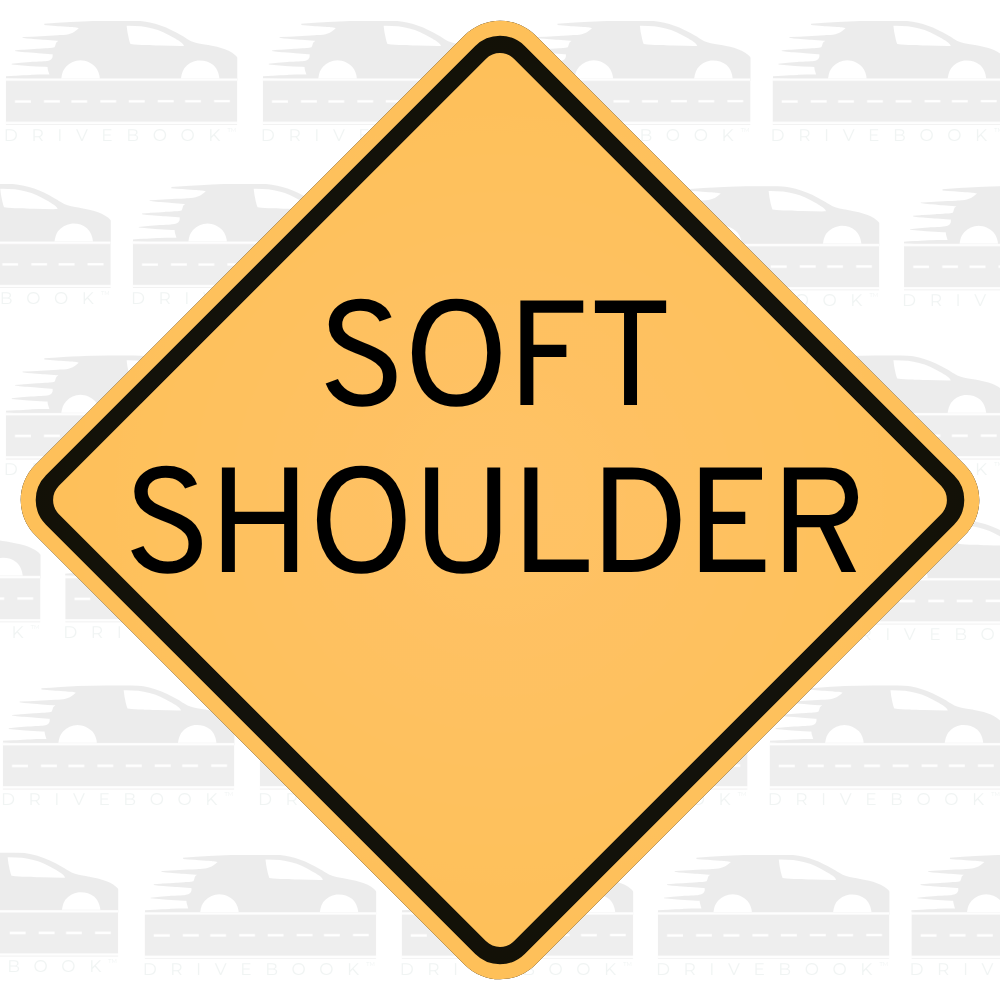
    The Soft Shoulder sign is a warning that the edge of the road (the shoulder) is not as stable or firm as the main driving surface. It might be gravelly, muddy, sandy, uneven, or simply not packed down the same way as the travel lane.

    This sign isn’t telling you that something is definitely wrong. It’s giving you a calm heads-up so you don’t accidentally drift off the pavement and then overcorrect.

    For official U.S. sign standards and usage, the Soft Shoulder sign is covered in the MUTCD’s warning sign guidance: FHWA MUTCD (Warning Signs).


    What “soft shoulder” means in plain language

    A “soft shoulder” means:

    • The shoulder may sink under a tire
    • The edge may be lower than the pavement
    • The surface may be loose (gravel) or slick (mud/wet grass)
    • It may be harder to steer or brake smoothly if you’re partly off the road


    Why this sign exists

    Shoulders are there to give drivers extra space for emergencies, breakdowns, and (in some places) bikes or stopped vehicles. But not every shoulder is built the same.

    A soft shoulder can cause a problem when a driver:
    • Drifts off the edge slightly, then
    • Panics and jerks the wheel back onto the pavement

    That quick “snap back” can lead to loss of control. The sign is there to reduce that risk by encouraging steadier, more intentional driving near the edge.

    For broader roadway safety context and driver behavior resources, FHWA’s safety hub is a credible reference: FHWA Highway Safety.


    🌱 Why this matters even more in the spring

    Soft shoulders can be an issue any time of year, but spring is when road edges can change quickly—sometimes from one week to the next.

    A few reasons:

    • Spring thaw softens the ground
    • More rain increases saturation and instability
    • Freeze–thaw cycles can create uneven edges or drop-offs
    • Road work season introduces temporary surfaces and loose gravel

    So in spring, it helps to treat “Soft Shoulder” as a reminder to drive a little more precisely: stay centered, scan ahead, and avoid last-second steering.


    What you should do when you see this sign

    You don’t need a dramatic response. Think: stay centered, stay smooth, stay aware.

    • Hold a steady lane position (avoid drifting toward the white line)
    • Slow slightly if conditions are wet or visibility is limited
    • Increase following distance
    • Be extra cautious passing cyclists or stopped vehicles

    💬 Coach cue:
    “Let’s drive like the edge is less forgiving here.”


    If your tires drop onto the shoulder

    1. Stay calm and keep the wheel steady
    2. Ease off the accelerator (don’t slam the brakes)
    3. Let the car slow gradually
    4. Check mirrors and traffic
    5. Gently steer back onto the pavement when it’s safe

    Key idea: slow first, then return. Sudden steering is what causes the bigger problem.


    Common misconceptions

    • “The shoulder is basically the same as the road.”
    → Sometimes—but this sign means it might not be.

    • “If I drift off, I should jerk back fast.”
    → Fast corrections can cause skidding or loss of control.

    • “This only matters in rural areas.”
    → It can happen anywhere, especially near construction zones.


    Closing

    A soft shoulder simply means: be a little more precise.

    With calm steering, a centered lane position, and a little extra space, it’s an easy hazard to manage.


    If you want a calm, visual way to learn road signs and rules (and understand the “why” behind them), you can explore Drivebook:
    https://mydrivebook.com


    References

    • FHWA MUTCD (Warning Signs – Part 2C)
    • FHWA Highway Safety

    Share this: