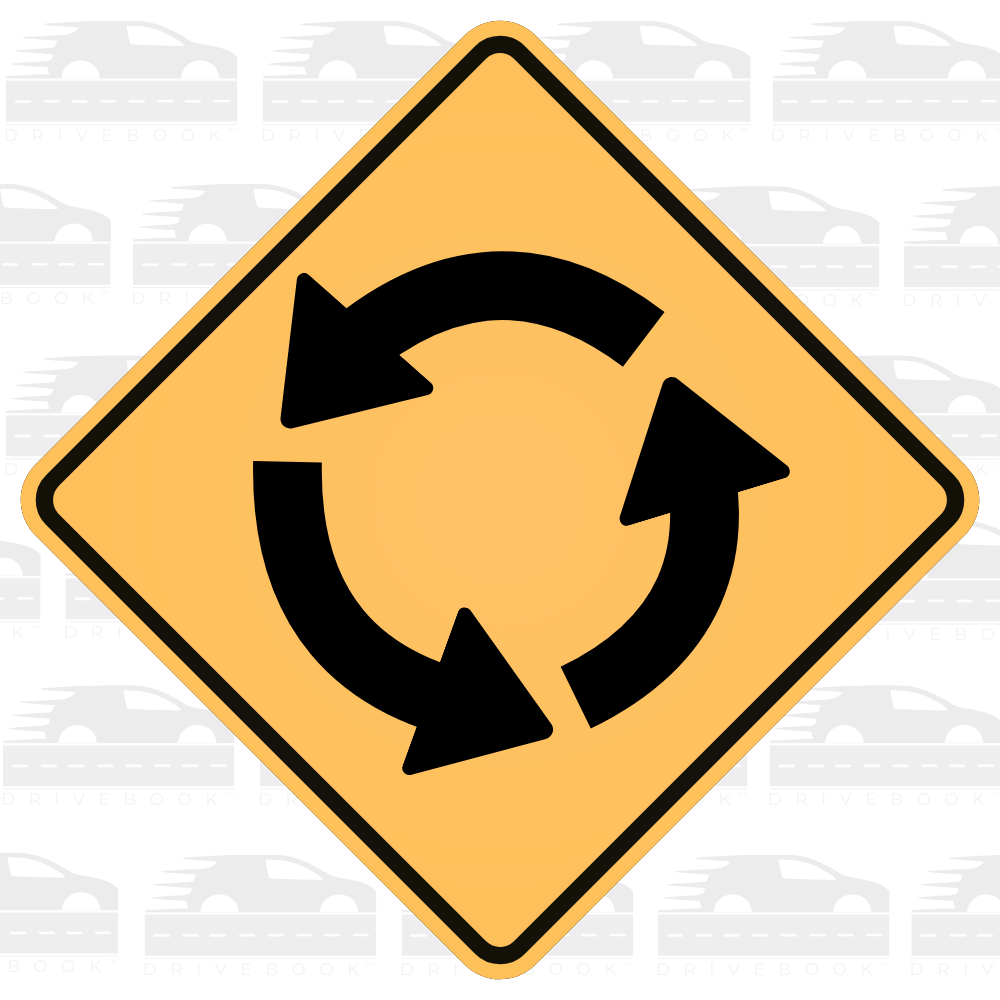
A Traffic Circle sign is a warning sign that tells you: a circular intersection is coming up, and you’ll need to slow down, watch for other vehicles, and follow the circle’s right-of-way rules.
Traffic circles (and modern roundabouts) are designed to keep traffic moving with fewer full stops. For new drivers, the key is staying calm and predictable: slow down early, look where you want to go, and enter only when you have a safe gap.
What the Traffic Circle sign means
Traffic Circle means:
- You’re approaching a circular intersection
- Traffic will move around a central island
- You may need to yield before entering (often to traffic already in the circle)
The sign is there so you’re not surprised by the shape of the intersection. Circles can feel unfamiliar at first, especially if you’ve mostly practiced at stop signs and traffic lights.
Why this sign exists
A traffic circle changes the “normal” intersection pattern:
- Instead of stopping and taking turns, drivers merge into a circulating flow
- Instead of crossing straight through, you curve around the center
The sign gives you time to adjust your speed and scanning — which is where most new-driver mistakes happen.
What to do when you see it (step-by-step)
1) Slow down early
Circles work best at lower speeds. Slowing down early helps you:
- Read additional signs (YIELD, lane arrows, exits)
- Spot pedestrians near crosswalks
- Find a safe gap without rushing
2) Look for the yield line
Most circles use yield-on-entry rules:
- Yield to traffic already in the circle
- Enter when there’s a safe opening
If you’re unsure, it’s always okay to wait for a clearer gap.
3) Choose your lane before entering
- Follow lane arrows and signs
- One lane = keep it simple
- Two lanes = pick early, avoid switching inside
4) Enter smoothly
You’re merging—not racing.
- Don’t stop inside the circle
- Don’t force other drivers to brake
- Missed your exit? Just go around again
5) Signal when you exit
- Use your right turn signal before exiting
- Watch for pedestrians at the crosswalk
Common misconceptions teens have
“It’s like a four-way stop.”
→ Not usually. Most are yield-on-entry.
“If I’m nervous, I should stop inside.”
→ This creates confusion and risk.
“I can just switch lanes inside.”
→ Possible sometimes—but not a good plan for beginners.
Quick coaching tip (for parents)
Before entering, say:
- “Slow.”
- “Look left.”
- “Yield if needed.”
- “Enter smoothly.”
- “Signal to exit.”
It keeps the focus on process, not pressure.
Closing
The Traffic Circle sign is just a heads-up: the intersection ahead works a little differently—and that’s okay.
With a slower approach, steady scanning, and a smooth merge, traffic circles become predictable and manageable.
If you want a calm, visual way to learn signs and right-of-way rules (with the why explained), visit mydrivebook.com.