Published on mydrivebook.com | Sunday Sign Day Series
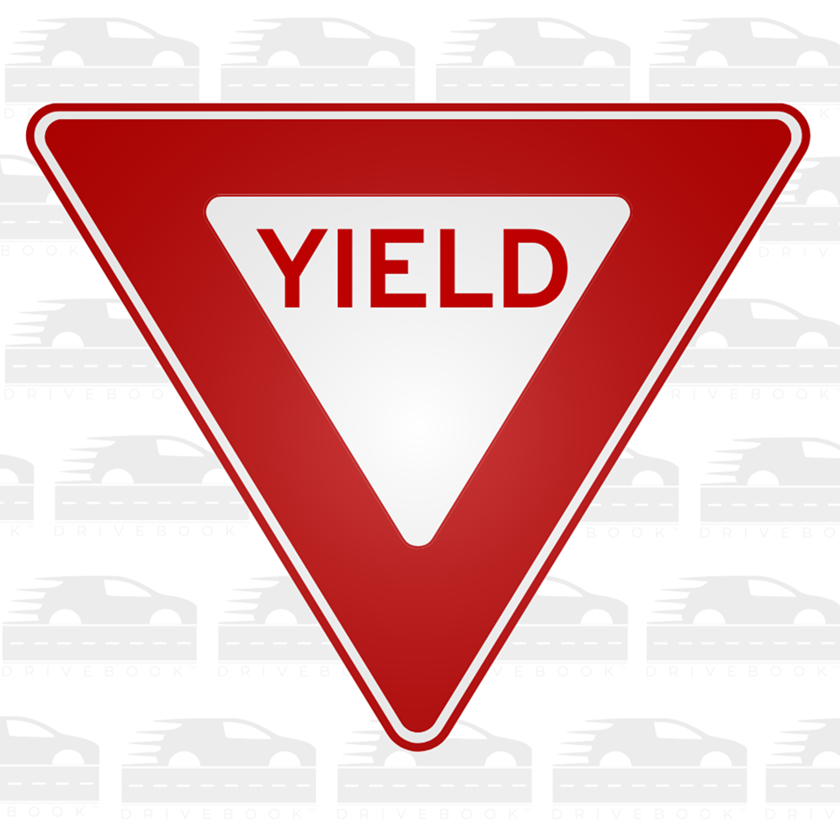
Yield Sign
The yield sign is a red downward-pointing triangle with a white center — one of the most recognizable regulatory signs on U.S. roads.
You’ve seen the yield sign hundreds of times. It’s the red triangle pointing downward, usually posted where a smaller road meets a busier one, or at the entrance to a roundabout. But for many new drivers, the yield sign creates a moment of uncertainty: Do I stop? Do I slow down? Do I just go?
This week’s Sunday Sign Day breaks it all down — what the yield sign means, why it exists, what to do when you see one, and the most common misconceptions teens have about it.
What the Yield Sign Means
The yield sign means: slow down, look, and give the right of way to traffic already in the roadway you’re entering. You do not have to come to a complete stop — but you must be prepared to stop if traffic requires it.
According to the Federal Highway Administration’s Manual on Uniform Traffic Control Devices (MUTCD), the yield sign “assigns right-of-way to traffic on certain approaches to an intersection. Vehicles controlled by a YIELD sign need to slow down or stop when necessary to avoid interfering with conflicting traffic.”
In plain terms: the other road has priority. You wait until it’s safe to merge or enter.
Why the Yield Sign Exists
The yield sign is used in situations where a full stop isn’t always necessary — but where one road clearly has priority over another. Common locations include:
- Roundabout entrances — vehicles inside the roundabout have the right of way
- Merge lanes — where a secondary road joins a main road
- T-intersections — where the cross street has priority
- Pedestrian crossings — some crosswalks use yield signs to remind drivers to give way
The logic behind the yield sign is efficiency with safety. A stop sign requires every vehicle to stop, even when there’s no traffic. A yield sign allows drivers to keep moving when conditions are clear — while still requiring them to give way when they’re not.
What to Do When You See a Yield Sign
- Slow down as you approach — don’t maintain your current speed.
- Look left, then right, then left again — check for oncoming traffic, cyclists, and pedestrians.
- If the way is clear, you may proceed without stopping.
- If traffic is present, stop and wait until there is a safe gap to enter.
- Never assume the other driver will slow down for you — you are the one yielding.
Common Misconceptions Teen Drivers Have
“Yield means slow down a little and keep going.” Not quite. Yield means slow down enough to stop if needed. If traffic is present, you must wait — not just slow down.
“It’s basically the same as a stop sign.” They’re related but different. A stop sign requires a complete stop every time. A yield sign only requires a stop if conditions call for it. The key difference is that with a yield sign, you’re responsible for judging whether it’s safe to proceed.
“If I have a yield sign, I have no right of way at all.” Not entirely true. If the road is clear, you can proceed — you just can’t claim priority over traffic that’s already there.
The Takeaway
The yield sign is about cooperation and awareness. It asks you to slow down, assess the situation, and make a judgment call — which is actually great practice for the kind of thinking all driving requires.
For more clear explanations of road signs and driving rules, visit mydrivebook.com. The Drivebook™ learning system is designed to help new drivers understand the why behind the rules — not just memorize them.
Sources: FHWA MUTCD — Regulatory Signs, Chapter 2B | NY DMV — Traffic Control