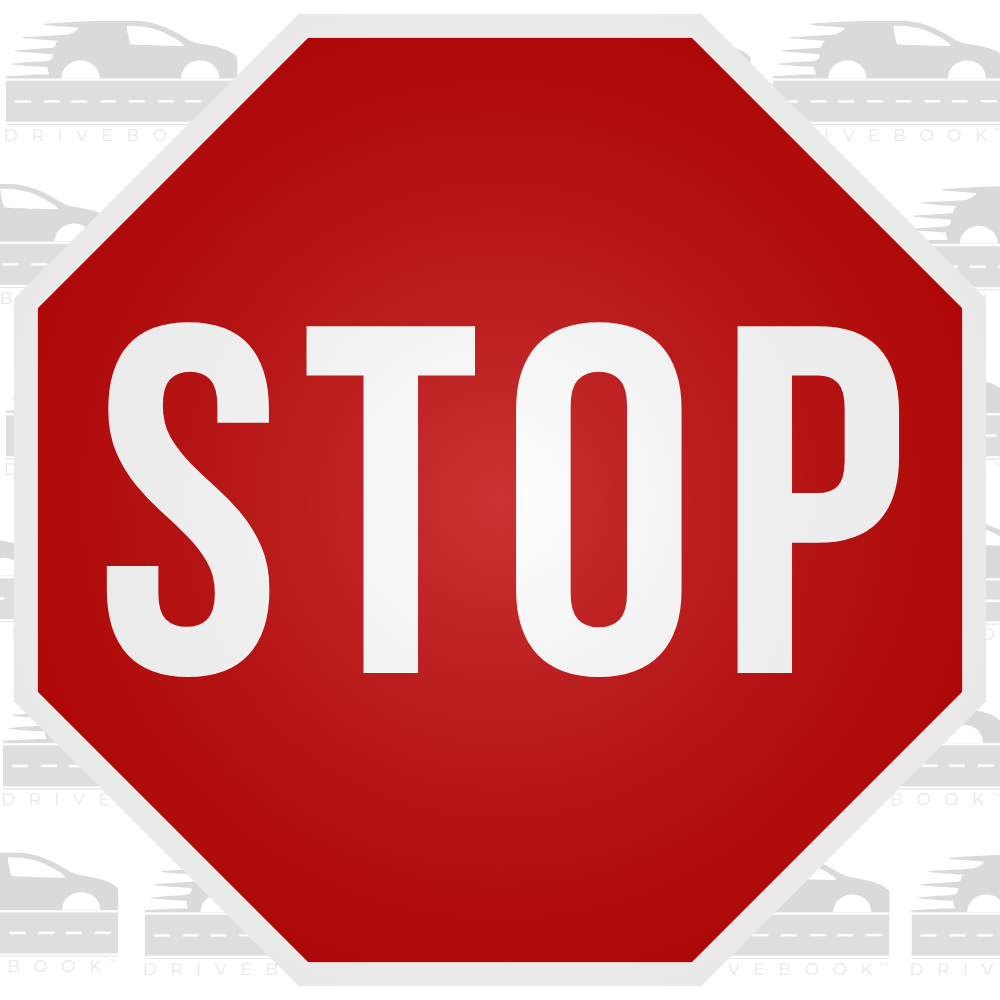
Stop Sign — not a Beyoncé song.
This one means stop the car. Every time.
What you do in your relationship… that’s up to you 😄
A STOP sign is one of the clearest instructions on the road: you must come to a complete stop and follow right-of-way rules before you go.
It’s also one of the most common places new drivers lose points on a road test — not because they’re careless, but because “stop” has a few details people don’t always explain (where to stop, how long to pause, and what to do when you can’t see).
For official sign standards and examples, the national reference is the MUTCD:
What a Stop sign means (plain language)
A Stop sign means:
- Stop completely (wheels stop moving).
- Yield the right-of-way to pedestrians and other traffic.
- Go only when it’s your turn and it’s safe.
It doesn’t mean “slow down a lot.” It doesn’t mean “stop if someone’s coming.” It means stop every time.
What a “full stop” actually looks like
A full stop is simple, but it should be obvious:
- Your car’s wheels stop turning.
- You pause long enough to look left, right, left (and check for pedestrians).
- Then you move when it’s safe.
A “rolling stop” (where the car keeps creeping) is still a not-a-stop.
Where you’re supposed to stop
This is the part that trips people up.
You should stop before:
- The stop line (thick white line), if there is one
- The crosswalk, if there’s no stop line
- The edge of the intersection (the place where you’d enter the cross traffic), if there’s no line or crosswalk
If you stop too far forward, you may block the crosswalk or pull into traffic.
What to do if you can’t see from the stop line
Sometimes you stop correctly — and still can’t see around a parked car, bushes, a building, or a hill.
A calm, safe method is a two-step stop:
- Stop fully at the correct place (line/crosswalk/edge).
- If you still can’t see, creep forward slowly to a better view, then stop again before entering.
This shows you understand both the rule and the reason behind it.
Who goes first? (a simple way to remember)
Right-of-way rules vary a bit by state, but these basics are widely taught:
- Pedestrians first (always).
- At a 4-way stop, the first vehicle to stop is usually the first to go.
- If two vehicles stop at the same time, the vehicle on the right usually goes first.
- If you’re turning left and another car is going straight, the car going straight usually goes first.
If it feels confusing, the best habit is: slow, make eye contact when possible, and don’t rush.
Common misconceptions teens have
Misconception 1: “If no one’s there, I don’t have to stop.”
You still have to stop. The point is consistency — so everyone can predict what you’ll do.
Misconception 2: “Stopping means putting my foot on the brake.”
A stop means the car is not moving. If you’re still creeping, you’re still moving.
Misconception 3: “I should stop in the crosswalk so I can see.”
Crosswalks are for people walking. Stop before the crosswalk, then creep forward only if you need a better view.
A quick coaching tip for parents
Try a simple script that builds a repeatable habit:
- “Full stop. Look left-right-left. Then go when it’s your turn.”
It keeps the focus on process — not pressure.
Closing
A Stop sign is a pause point — a moment to reset, scan, and make a calm decision. When you treat every stop the same way, it becomes one of the most dependable habits you can build as a new driver.
For more calm, visual explanations of road signs and right-of-way rules, visit mydrivebook.com.