As spring weather arrives, rain becomes more frequent — and so does the need to pay attention to road conditions. The “Slippery When Wet” sign is one you’ll see often, especially in areas with frequent rain, near bridges, or on roads that tend to collect water. It’s a warning sign, which means it’s giving you advance notice of a condition that requires extra caution.
Understanding what makes a road slippery, and what to do when you see this sign, can help you stay in control when conditions change quickly — something that happens often during spring.
What the Sign Looks Like
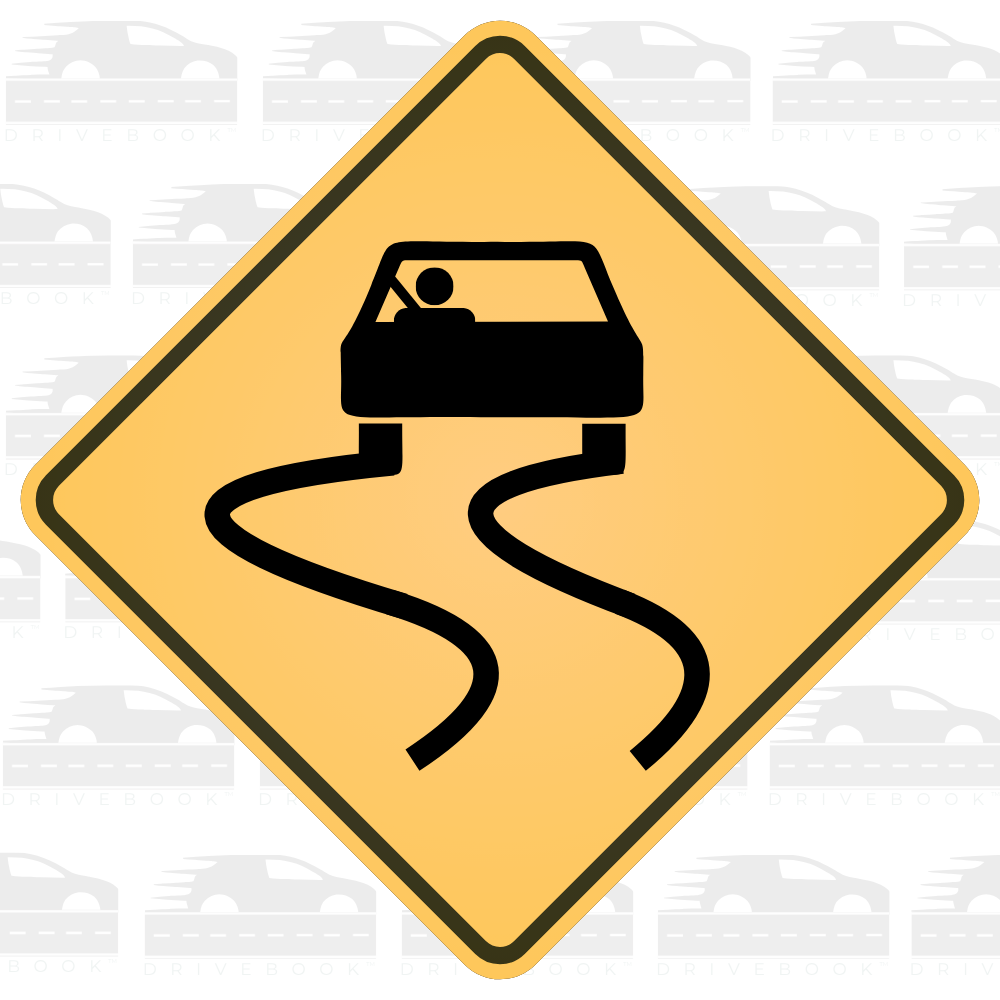
The Slippery When Wet sign is a yellow diamond with a black symbol showing a car with skid marks trailing behind it. The image is simple and visual — you don’t need to read words to understand that traction may be reduced ahead.
Yellow diamond signs are always warnings. They alert you to upcoming road conditions, hazards, or changes that require you to adjust your speed or attention. According to the Manual on Uniform Traffic Control Devices (MUTCD), warning signs are placed in advance of the hazard to give drivers time to respond safely.
What It Means
This sign warns that the road surface ahead is more likely to become slippery when wet — more so than a typical road. That could be due to:
- Road surface material: Some pavement types (like certain asphalt mixes or painted surfaces) become especially slick when wet.
- Oil buildup: Roads that don’t get much rain can accumulate oil and residue. When it finally does rain, that layer mixes with water and creates a slippery film — especially dangerous during the first few minutes of rainfall.
- Drainage issues: Areas where water pools or doesn’t drain well are more prone to hydroplaning.
- Bridge decks and overpasses: These freeze before regular roads and can stay wet longer, making them particularly hazardous in cold or rainy weather.
The sign doesn’t mean the road is always slippery — it means you should expect reduced traction when conditions are wet.
What You Should Do
When you see this sign:
- Slow down before the road gets wet, not after. If it’s already raining or the pavement looks wet, reduce your speed as you approach the signed area.
- Increase your following distance. Wet roads can double your stopping distance. Give yourself more space between you and the car ahead.
- Avoid sudden movements. Hard braking, sharp turns, or quick lane changes can cause your tires to lose grip on slippery pavement.
- If you start to skid, ease off the accelerator and steer gently in the direction you want to go. Don’t slam the brakes.
The NHTSA’s guidance on driving in wet conditions emphasizes that most skid-related crashes happen because drivers don’t adjust their speed soon enough.
Common Misconceptions
“I have good tires, so I don’t need to slow down.” Even new tires can lose traction on a slippery surface, especially if there’s oil buildup or standing water. Tires help, but they’re not a substitute for adjusting your driving.
“The sign is just there all the time — it doesn’t mean anything right now.” Warning signs are placed based on known hazards. If the sign is there, the road has a history of being slippery when wet. Take it seriously, even if conditions seem fine at the moment.
“I’ll just brake earlier if I need to.” Braking on a slippery surface is less effective and can cause a skid. The better approach is to drive slower from the start so you don’t need to brake hard.
For Parents and Coaches
This is a great sign to practice with. If you see one on a dry day, point it out and talk through what your teen would do differently if it were raining. Building that mental habit — connecting the sign to the action — makes it more automatic when conditions actually change.
Why This Sign Matters
Slippery When Wet signs exist because certain stretches of road are genuinely more dangerous in wet conditions. Recognizing the sign and responding to it appropriately is a simple but important part of defensive driving — especially as spring showers become more common.
For more clear, visual explanations of road signs and driving rules, visit Drivebook at mydrivebook.com.
Sources: